Published June 24, 2026
Yunnan Coffee vs Kenya Coffee: A Complete Comparison
Yunnan and Kenya sit on opposite sides of the coffee world — geographically, historically, and flavor-wise. Yet they share a surprising number of parallels: both grow Arabica at high altitudes, both emerged from British colonial influence, and both are known for producing some of the most distinctive coffees in their respective hemispheres.
But put them side by side in a cupping, and the differences are impossible to miss. Kenya hits you with bright, wine-like acidity and complex fruit notes. Yunnan offers smooth body, gentle sweetness, and approachable balance. One is a flavor bomb; the other is an everyday masterpiece.
In this guide, we'll compare Yunnan and Kenya coffee across growing conditions, varieties, processing, flavor, and value — so you can decide which one belongs in your next brew.
Why This Comparison Matters
Kenya is the gold standard for high-altitude Arabica — its SL28 and SL34 varieties set the bar for what complex coffee can be. Yunnan is the wild card — an origin still finding its identity, but already producing exceptional coffee at a fraction of the price of established origins.
If you are a specialty coffee drinker, understanding the difference between these two origins helps you make smarter buying decisions. Should you splurge on a bag of Kenyan AA from a top auction lot? Or grab two bags of honey-processed Yunnan and explore a range of flavors for the same price? This guide gives you the data to decide.
At a Glance: Yunnan vs Kenya
| Factor | Yunnan | Kenya |
|---|---|---|
| Altitude | 1,000–1,900 m | 1,500–2,100 m |
| Primary Varieties | Catimor, Caturra, Typica, Bourbon | SL28, SL34, Ruiru 11, Batian |
| Processing | Washed, honey, natural, super-anaerobic | Washed (double-fermented), some natural |
| Body | Medium to full, creamy | Medium, crisp |
| Acidity | Mild to moderate, apple-like | High to very high, wine-like |
| Annual Production | ~150,000–200,000 tonnes | ~50,000 tonnes |
| Export Market | 90% domestic (growing export) | 80% export |
| Average Price (Green) | $5–15/kg | $8–30/kg (auction) |
Terroir & Growing Regions
Yunnan's coffee belt runs through the southern and western parts of the province — Baoshan, Pu'er, Dehong, and Lincang — at elevations of 1,000–1,900 meters. The region's subtropical highland climate, with distinct wet and dry seasons, mirrors classic Arabica-growing conditions. The soil is rich in organic matter, and many farms sit on mountain slopes that provide excellent drainage.
What makes Yunnan unique is its latitude. At roughly 21–25°N, it sits farther north than most coffee-growing regions — north of Ethiopia (6–15°N), Colombia (1–10°N), and even parts of Mexico. This edge-of-the-belt location means slower cherry maturation, which contributes to dense, complex beans.
Kenya's coffee is grown primarily around the slopes of Mount Kenya, the Aberdare Range, and the Rift Valley, at elevations of 1,500–2,100 meters. The volcanic soils, cooler temperatures, and dramatic day-night temperature swings create ideal conditions for slow bean development. Kenya's equatorial location (roughly 0–4°S) gives it two harvest seasons per year — a rarity in the coffee world.
The altitude difference matters. Kenya's higher average elevation (1750m vs 1400m for most Yunnan farms) means slower cherry maturation and denser beans, which translates to more concentrated acidity and flavor complexity.
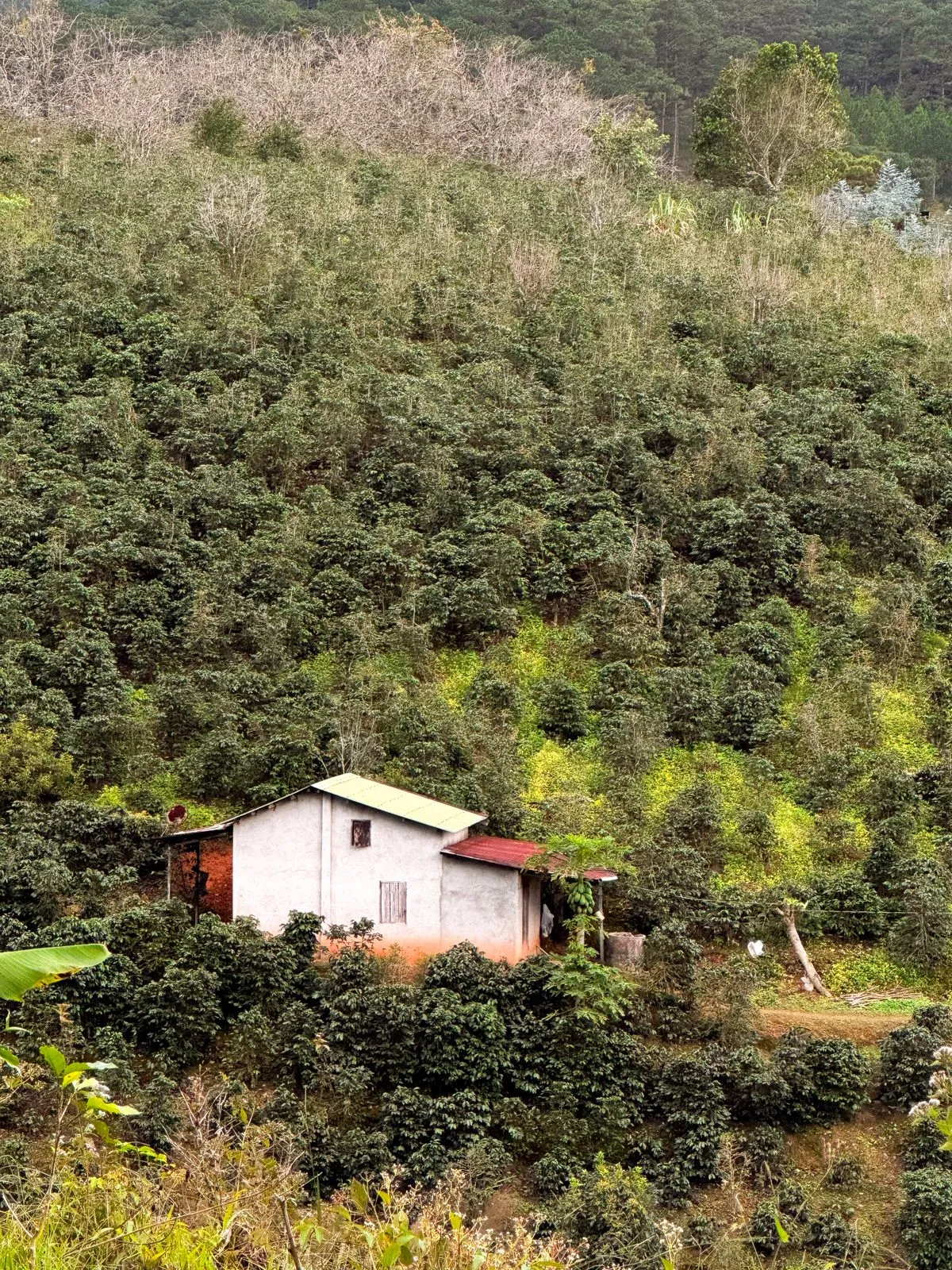
Kenya's volcanic highlands produce some of the world's most distinctive Arabica — SL28 and SL34 varieties grown on the slopes of Mount Kenya and the Aberdare Range.
Varieties: Catimor vs SL28
This is where the two origins diverge most dramatically.
Yunnan is dominated by Catimor, a cross between Caturra and Timor Hybrid that accounts for over 90% of planted trees. Catimor is high-yielding and disease-resistant — essential traits for a region rebuilding its coffee industry after the 1990s. But it has historically been criticized for lacking the complexity of traditional Arabica varieties. That's changing: Yunnan farmers are now planting Caturra, Typica, Bourbon, and Geisha on experimental plots, and the results are promising.
Kenya is famous for its proprietary varieties — SL28 and SL34 — developed by Scott Laboratories in the 1930s. These varieties are widely considered among the best-tasting Arabica cultivars in the world. SL28 produces bright, complex cup profiles with unmistakable blackcurrant and tomato notes. SL34, adapted to lower elevations, offers a slightly heavier body with similar complexity. Newer varieties like Ruiru 11 and Batian offer disease resistance, but purists still seek out SL28 for its unmatched cup quality.
The variety difference is the single biggest factor separating these two origins. Kenya's SL28/SL34 genetics give it a natural flavor advantage that Yunnan is still working to match through variety diversification and processing innovation.
| Variety | Origin | Flavor Notes | Yield | Disease Resistance |
|---|---|---|---|---|
| Catimor | Yunnan (90%+) | Chocolate, nut, mild acidity | High | Excellent |
| SL28 | Kenya | Blackcurrant, tomato, wine | Moderate | Low |
| SL34 | Kenya | Citrus, body, blackberry | Moderate | Low |
| Caturra | Yunnan (growing) | Apple, honey, bright | Moderate | Moderate |
| Bourbon | Yunnan (limited) | Caramel, red fruit, sweet | Low | Low |
| Batian | Kenya (new) | Cocoa, citrus, balanced | High | High |
Flavor Profile Showdown
Yunnan
Washed: Milk chocolate, green apple, almond, jasmine tea — clean and approachable
Honey: Brown sugar, peach, vanilla — sweet and round
Natural: Dark berry, cocoa, fermented fruit — bold for Yunnan
Super-anaerobic: Winey, tropical fruit, whiskey-like — experimental and intense
Kenya
Washed (standard): Blackcurrant, tomato, grapefruit, red wine — bright and sharp
Washed (double-fermented): Complex berry, rosehip, brown sugar — layered and vibrant
Natural (rare): Dried strawberry, passionfruit, wine-like — exotic but uncommon
The simplest way to put it: Kenya is loud. Yunnan is quiet. Kenya's acidity can be jarring if you're not prepared for it — it's aggressive, wine-like, and demands attention. Yunnan's flavors are more subtle, unfolding gradually as the coffee cools. Neither is better; they're designed for different moments.
Processing: Innovation vs Tradition
Yunnan has become a processing laboratory. While washed coffee is still the most common (around 60% of production), Yunnan farmers have embraced honey and natural processing at a scale rarely seen outside of Brazil and Costa Rica. In the last 3–4 years, super-anaerobic fermentation has exploded in popularity, especially among boutique producers in Pu'er and Baoshan. This experimental spirit makes Yunnan one of the most exciting origins for adventurous coffee drinkers.
Kenya is deeply traditional. Over 95% of Kenyan coffee is washed — and not just washed, but double-fermented. After depulping, the beans are fermented dry for 12–24 hours, then washed and soaked in clean water for another 12–24 hours. This meticulous process produces the clean, bright, wine-like cup profile Kenya is famous for. Natural and honey-processed Kenyan coffees do exist, but they're rare and typically experimental.
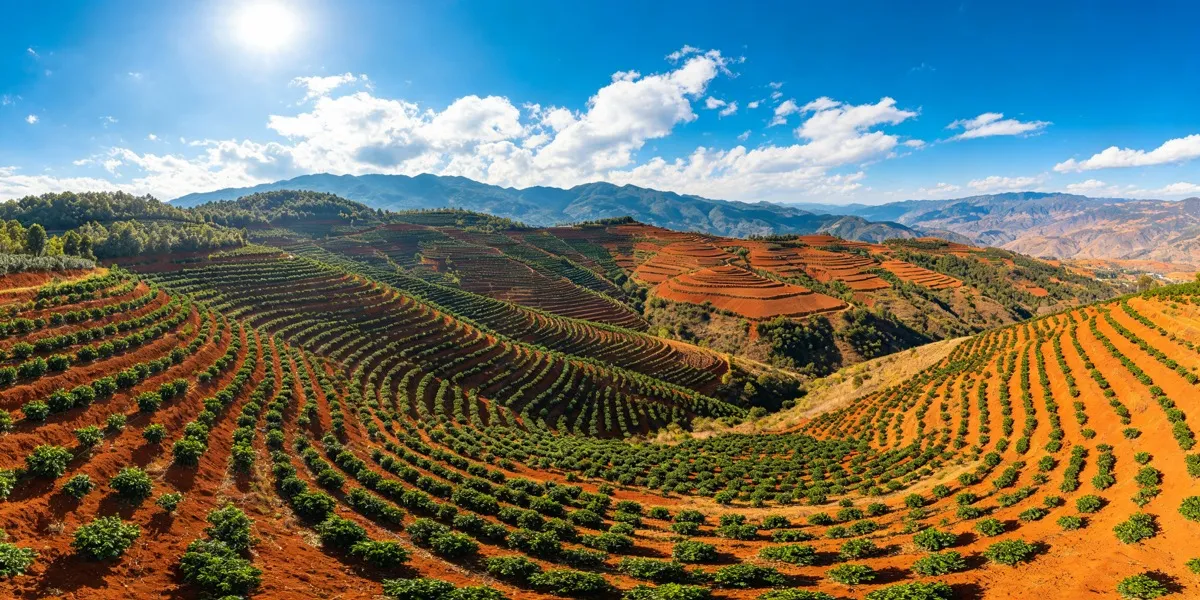
Yunnan's coffee farms sit at 1,000-1,900m in the subtropical highlands — a rising origin known for experimental processing and approachable flavor profiles.
Coffee Culture: Everyday vs Special Occasion
In Yunnan, coffee is gaining cultural foothold. Local cafés in Kunming and Pu'er serve pour-overs alongside traditional tea. The annual Pu'er Coffee Festival draws international buyers. But coffee is still finding its identity in a province that's been drinking tea for thousands of years. This cultural openness means Yunnan roasters and producers are willing to experiment without the weight of centuries of coffee tradition.
In Kenya, coffee is serious business. The auction system — established in the 1930s — is one of the most transparent in the world. Coffee is the country's fifth-largest export. Kenyans drink chai (tea) far more than coffee, reserving their exceptional beans for export. This creates a dynamic where the best Kenyan coffee is designed to impress international buyers, not local drinkers.
The result? Yunnan coffee feels approachable and experimental. Kenyan coffee feels prestigious and refined. Both have their place.
Value & Pricing
| Factor | Yunnan | Kenya |
|---|---|---|
| Green Bean (entry) | $5–8/kg | $8–15/kg |
| Green Bean (premium) | $12–20/kg | $20–50/kg (top auction lots) |
| Roasted (bag, 250g) | $8–18 | $15–35 |
| Availability (outside origin) | Growing — more specialty roasters every year | Widespread — available from most specialty roasters |
| Best Value For | Honey-processed and natural Yunnan ($10–15/bag) | Mid-tier auction Kenya ($15–22/bag) |
Yunnan offers better value for everyday drinking. You can get a very good honey-processed Yunnan for $10–12 per 250g bag — comparable to a decent Central American coffee. Premium Yunnan (super-anaerobic, Geisha experiments, single-farm microlots) can reach $18–20, which is still a bargain compared to top Kenyan lots.
Kenya commands a premium for its reputation and cup quality. Entry-level Kenyan coffee starts around $15/bag, and top auction lots can hit $30–50. The gap is justified by the flavor complexity of SL28 varieties, but it means Kenyan coffee is typically a "splurge" purchase rather than an everyday staple.
Pros & Cons
Yunnan — Pros
- ✅ Excellent value — high quality at low prices
- ✅ Wide processing diversity (honey, natural, anaerobic)
- ✅ Smooth, approachable flavor profile
- ✅ Experimentation is encouraged and affordable
- ✅ Great for espresso and milk-based drinks
Yunnan — Cons
- ❌ Catimor dominance limits flavor ceiling
- ❌ Less acidity and complexity vs top origins
- ❌ Availability outside China is still limited
- ❌ Quality inconsistency across farms
Kenya — Pros
- ✅ World-class cup quality (SL28/SL34)
- ✅ Bright, complex, wine-like acidity
- ✅ Transparent auction system
- ✅ Widespread global availability
- ✅ Consistent quality from top estates
Kenya — Cons
- ❌ Premium pricing ($8–30+/kg green)
- ❌ Limited processing diversity (>95% washed)
- ❌ Can be too acidic or sharp for casual drinkers
- ❌ Best lots are unaffordable for most home brewers
Brewing Recommendations
These two origins perform differently across brewing methods. Here is what works best:
| Brew Method | Best for Yunnan | Best for Kenya |
|---|---|---|
| Pour-over (V60) | ⭐⭐⭐ — Clean, tea-like Yunnan brightens up | ⭐⭐⭐⭐⭐ — Where Kenya's acidity shines brightest |
| Espresso | ⭐⭐⭐⭐⭐ — Chocolatey body = perfect shot | ⭐⭐ — Too sharp, needs careful dial-in |
| French Press | ⭐⭐⭐⭐ — Full body, creamy mouthfeel | ⭐⭐⭐ — Mutes acidity, loses character |
| Cold Brew | ⭐⭐⭐⭐ — Smooth, sweet, low bitterness | ⭐⭐⭐ — Interesting but not ideal |
| Aeropress | ⭐⭐⭐⭐ — Versatile, clean cups | ⭐⭐⭐⭐ — Controls acidity, good balance |
Which Should You Choose?
Choose Yunnan if:
- You prefer smooth, balanced, sweet coffees with chocolate and nut notes
- You want to explore experimental processing (honey, anaerobic) without breaking the bank
- You brew mostly espresso or milk drinks
- You're looking for a high-value everyday coffee
- You're curious about Asia's emerging specialty coffee scene
Choose Kenya if:
- You crave bright, wine-like acidity and complex fruit flavors
- You're a pour-over enthusiast who chases clarity and vibrance
- You want to experience one of the most famous coffee origins in the world
- You're willing to pay a premium for exceptional cup quality
- You enjoy blackcurrant, tomato, and grapefruit notes in your coffee
Or better yet: try both. Brew a Kenyan pour-over in the morning when you want to wake up your palate, and a Yunnan espresso in the afternoon when you want something smooth and comforting. They're not competitors — they're complementary.
Final Verdict
Yunnan vs Kenya: the verdict.
If this were a boxing match, Kenya would win on points — its SL28 cup quality is genuinely world-class, backed by decades of expertise and a transparent auction system. Kenya is the established champion, and it deserves the respect it gets.
But Yunnan is the rising contender. It's more affordable, more experimental, and more accessible. For the price of a single bag of top Kenyan coffee, you can buy three or four bags of Yunnan and explore honey, natural, anaerobic, and washed profiles. That's a compelling value proposition.
Kenya wins on peak cup quality. Yunnan wins on value, diversity, and experimentation. Both deserve a spot in your coffee rotation.
Frequently Asked Questions
Is Kenyan coffee better than Yunnan?
For pure cup quality and complexity, Kenya's best beans (SL28/SL34 from top auction lots) are widely considered superior to most Yunnan coffee. However, Yunnan offers better value, more processing variety, and a smoother, more approachable flavor profile that many drinkers prefer for daily drinking.
Which is more expensive — Yunnan or Kenya?
Kenya is significantly more expensive. Entry-level Kenyan green beans start at $8–15/kg, while Yunnan starts at $5–8/kg. Premium Kenyan auction lots can reach $30–50/kg, while premium Yunnan (single-farm, experimental processing) tops out around $15–20/kg.
Can Yunnan coffee match Kenya's acidity?
Not yet — and it may never. Kenya's high acidity comes from its unique SL28/SL34 varieties, high altitude (1,500–2,100 m), and distinct double-fermentation processing. Yunnan's dominant Catimor variety produces milder acidity naturally. That said, Yunnan's super-anaerobic processed coffees can produce wine-like acidity that approaches Kenyan intensity, though with a very different flavor profile.
Which origin is better for espresso?
Yunnan, especially honey or natural processed Yunnan, works exceptionally well as espresso. Its chocolatey body, low acidity, and creamy mouthfeel create a classic espresso profile. Kenya's high acidity can make for an interesting but polarizing espresso — better suited to pour-over methods where its complexity can shine.
Which origin has more sustainable farming?
Both face sustainability challenges. Kenya's auction system, while transparent, doesn't always return fair prices to smallholder farmers. Yunnan's land consolidation programs have helped some farms modernize, but deforestation for coffee expansion is a concern. In both origins, buying from reputable importers who work directly with farmers is the best way to support sustainable practices.
Is Yunnan coffee similar to Kenyan coffee?
Not really. Despite both being high-altitude Arabica producers, their flavor profiles are dramatically different. Yunnan is known for chocolate, nut, and mild apple-like acidity, while Kenya is famous for bold blackcurrant, tomato, and wine-like flavors. The primary reason is variety genetics — Yunnan is dominated by Catimor, while Kenya grows SL28 and SL34.
Can you blend Yunnan and Kenya coffee?
Yes, and it can work well. A 70/30 or 60/40 blend (Yunnan as base, Kenya as accent) combines Yunnan's creamy chocolate body with Kenya's bright acidity. Aim for a medium roast that preserves both origins' character. This is an under-explored blend that home roasters should experiment with.
Want to explore more comparisons? See how Yunnan compares to Colombia, Costa Rica vs Yunnan, Ethiopia vs Brazil vs Yunnan, and Yunnan vs Vietnam's Robusta empire. For the big picture, start with what makes Yunnan coffee unique.
Looking to buy? Our Yunnan Coffee Buying Guide (Chinese) has recommendations for roasters and specific beans to try.